

Mobile isn’t a channel within ecommerce anymore — it’s become the default surface brands have to design around. According to Digital Applied, mobile devices now originate 75% of ecommerce traffic and 91% of social media sessions worldwide. The gap between mobile traffic and mobile revenue is where most of the opportunity sits right now, and closing it is really what mobile marketing strategy in 2026 comes down to.
The Conversion Gap Is Finally Closing
For years, mobile traffic dramatically outpaced mobile revenue, mostly because checkout experiences on phones lagged badly behind desktop. That’s shifted meaningfully. According to Ringly, the average mobile ecommerce conversion rate has reached 2.8% in 2026, finally matching desktop for the first time after years of a persistent gap. The remaining gap worth watching is average order value — $112 on mobile versus $155 on desktop — which points to mobile shoppers still buying smaller baskets than their desktop counterparts, even as conversion rates have equalized.
Apps Are Outperforming Mobile Web, Significantly
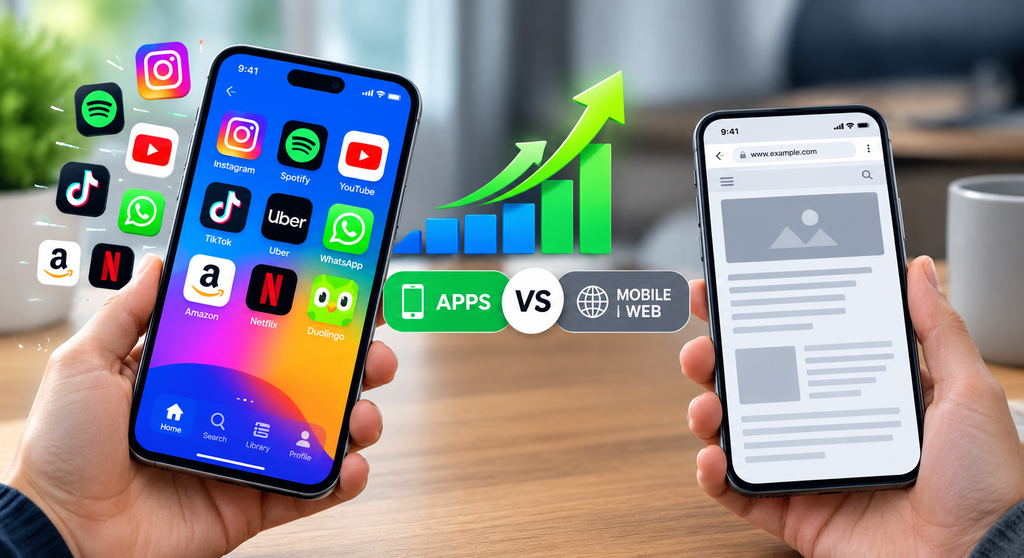
If you’re deciding where to invest development resources, the data is fairly clear. Shopping apps convert at 3.5%, compared to 2% on mobile web — a 75% conversion lift for brands with a dedicated app experience. More than half of mobile transactions, 54%, now happen inside apps rather than browsers, a share that keeps growing as more retailers invest in native app development. For brands with the resources to build one, an app isn’t just a convenience feature anymore — it’s a measurably better-converting channel than the mobile website it sits alongside.
SMS Remains The Highest-ROI Channel, Despite Predictions Of Its Decline
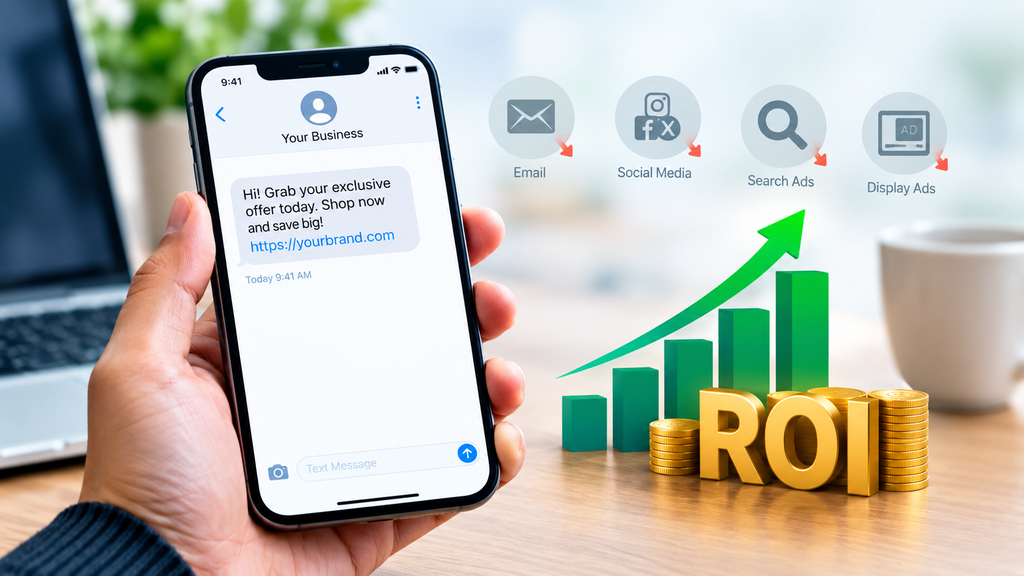
Mobile marketing has absorbed plenty of flashier channels over the years, but SMS keeps outperforming on raw response metrics. Per Digital Applied, SMS maintains a 19% click-through rate and a 45% conversion rate, outperforming every other owned marketing channel brands have direct control over. Combined with $50-plus average revenue per recipient for ecommerce brands specifically, SMS remains one of the highest-ROI mobile channels available, as long as it’s used within compliance boundaries around consent and frequency.
RCS messaging — essentially a richer, more interactive successor to standard SMS — is also emerging as a significant opportunity. According to Vibes, mobile marketing leaders increasingly cite frictionless redemption and cross-channel offer tracking as persistent pain points, and RCS is positioned to solve a meaningful chunk of that friction by letting brands track and attribute offers uniquely across both digital and in-store redemption.
AI-Driven Personalization Has Moved From Nice-to-Have To Core Strategy
Personalization at scale is no longer an experimental add-on. AI algorithms now routinely analyze browsing history, purchase patterns, and location data to recommend products and adjust in-app content dynamically in real time.According to The Droids on Roids, AI has moved from a “nice-to-have” to a core commercial advantage in 2026, with brands increasingly expected to deliver tailored recommendations and smoother customer journeys as a baseline expectation rather than a differentiator.
Social Commerce Is Becoming A Serious Revenue Channel
Social platforms have evolved well past simple product discovery into genuine point-of-purchase channels. US social commerce sales are projected to surpass $100 billion in 2026, putting the channel on par with many traditional retail categories.TikTok Shop in particular has normalized mobile-first, video-driven purchasing specifically for younger demographics, and social commerce overall is expected to account for more than 20% of total mobile commerce sales in several major markets this year.
AR Is Moving Into The Mainstream
Augmented reality has shifted from a novelty feature to a genuinely useful shopping tool. Letting customers virtually try on products or visualize items in their own space — a piece of furniture, a pair of glasses — is becoming standard rather than experimental, and it’s increasingly framed as accessible to mid-sized brands rather than reserved exclusively for major tech companies with large R&D budgets.
Category Performance Varies Widely
Not every product category converts the same way on mobile. According to Firework, food and beverage converts at 6.11% on mobile, the highest of any category, while luxury goods convert at just 1.19% — the lowest, reflecting the genuinely high-consideration nature of premium purchases that customers are often still more comfortable finalizing on a larger screen or in person. Brands selling into high-consideration categories specifically should factor this into how aggressively they push mobile-first checkout flows.
What This Means For Brands Right Now
A few practical priorities fall out of all this data.Mobile checkout optimization remains the single highest-leverage fix available, given how much of the conversion gap still sits there. SMS and increasingly RCS deserve a bigger share of marketing budget than their reputation as an “old” channel might suggest, given their consistently strong ROI. And for brands with the resources, investing in a dedicated app is no longer optional nice-to-have — it’s a measurable conversion advantage over mobile web alone.
The Bottom Line
Mobile marketing in ecommerce isn’t really a separate strategy anymore — it’s the default strategy, with desktop increasingly becoming the secondary consideration rather than the primary one. The brands pulling ahead in 2026 are the ones treating mobile as the core design surface from the start: fast checkout, native app investment, consistent SMS engagement, and AI-driven personalization working together rather than bolted on as an afterthought.

